
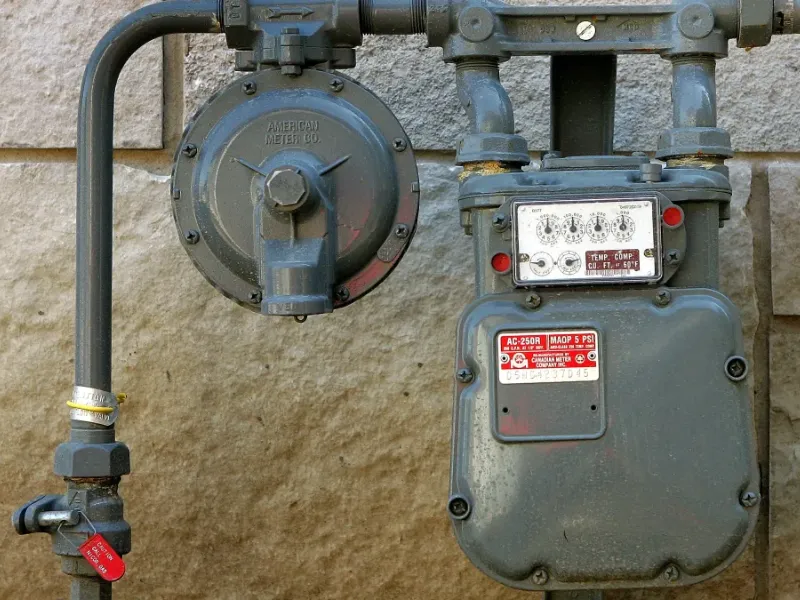
Gas Leak Repair
Code-compliant repair of gas lines, fittings and appliance connections after detection.
Learn MoreNatural gas is safe only while it stays inside the pipe. In Del Mar, where homes climb hillsides and sit atop ocean bluffs, a leak can travel through soil far from where it began. Our certified technicians confirm gas leaks in Del Mar homes and businesses with pressure testing and calibrated combustible gas meters, verifying every reading before we finish.


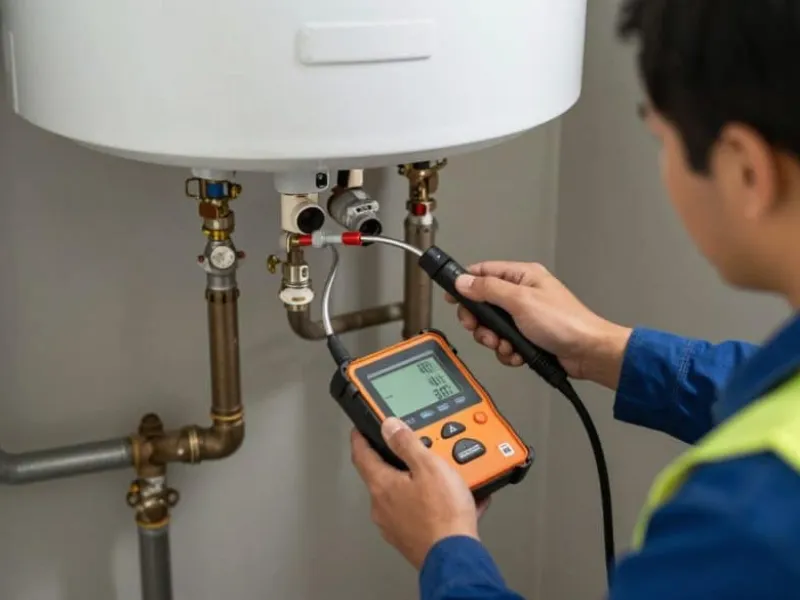
Del Mar is a small city with a wide range of housing, from vintage beach cottages near the sand to hillside and canyon homes built into steep lots. Gas piping of every age and material runs through them: black-iron and galvanized steel in the older properties, copper and flexible connectors in newer remodels, and exterior risers exposed to salt air year-round. Corrosion at those exterior fittings, plus shifting soil on sloped lots, sits behind many of the leaks we find.
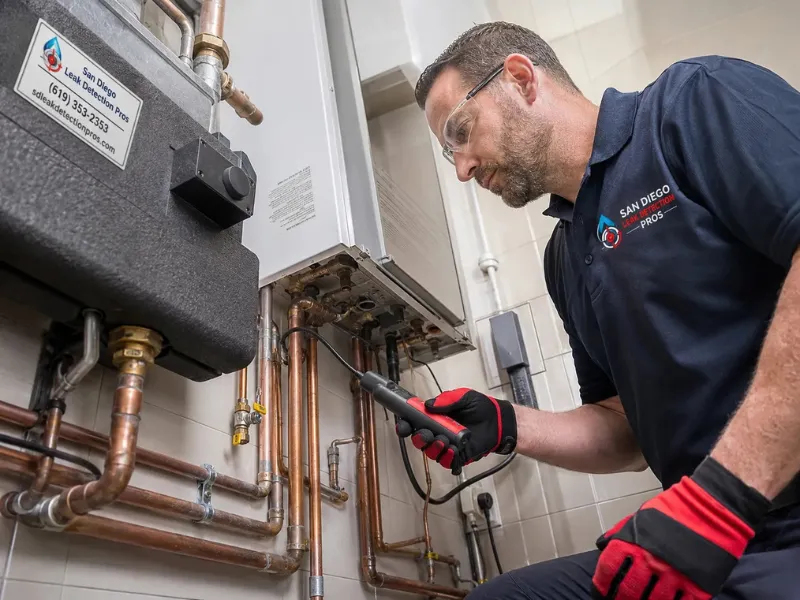
A gas inspection is a process of elimination backed by instruments. We isolate the system and pressure test it; if pressure falls with every appliance valve closed, gas is escaping. We then sweep the piping, fittings, valves and appliance connectors with a combustible gas meter until it alarms, and confirm each positive reading with a soap-solution bubble test so the finding never rests on a single instrument. You receive a marked location and a written report you can hand to SDG&E, an inspector or your insurer. For the broader service, see our gas leak detection page.
Utility companies add a sulfur-like odorant called mercaptan, yet some leaks stay silent. Trust your senses and treat any suspect smell or sound as real until a professional confirms otherwise.
The added odorant smells like sulfur. Any hint near a line or appliance deserves an immediate test.
A hiss close to a pipe, fitting, meter or appliance can indicate escaping pressurized gas.
A patch of dying grass or plants in an otherwise green yard can trace to a buried gas line.
Low-level exposure can cause symptoms that ease when you leave the building. Have the system tested.
An unexplained rise in gas consumption without a change in habits can point to a hidden leak.
Burners that will not stay lit or burn oddly can signal a pressure or supply problem.
Bubbles in damp soil or dust blowing from the ground are strong evidence of a buried rupture.
Black residue around an appliance can indicate incomplete combustion or a leaking connection.
Safe, organized and thorough from the first reading to the final written report.
We assess the situation, confirm appliances are isolated and make sure the area is safe to test before any instrument is used.
We pressurize the system to confirm whether gas is escaping and how significant the leak is.
A combustible gas meter traces the piping, fittings, valves and connectors until it pinpoints the source.
We verify with soap solution, mark the location and provide a written report with photos and readings.
Gas detection calls for calibrated equipment and careful confirmation, never improvised methods or open flames.
Calibrated sensors detect and measure gas concentration to pinpoint the leak source.
Measure gas pressure at appliances and regulators to reveal supply-side problems.
The classic bubble test confirms every positive reading so findings are reliable.
Readings and photos are recorded so you have a clear record for utility or insurance use.
Del Mar's hillside homes and ocean-bluff lots hide leaks in slopes, retaining walls and irrigation systems where water travels far from the source; salt air and older beach properties add to the mix. The same terrain that makes a leak hard to trace also makes it hard to predict where gas might collect. If you ever smell gas, evacuate first and call SDG&E from a safe location at 1-800-611-7343 before calling anyone else.
Symptoms that seem unrelated can also point to a leak. Headaches, dizziness and nausea that improve when you leave the building are worth investigating, as are dead patches of landscaping along a buried line. Documented testing matters too: a written report from a qualified technician helps satisfy utilities, home inspectors and insurers who want evidence rather than a hunch.
We quote flat, written estimates up front so there are no surprises. Several factors shape the price of a gas leak inspection in Del Mar.
Larger properties with multiple appliances, outdoor kitchens or detached structures take longer to test than a single-family home.
Accessible joints are quick to test. Concealed, buried or behind-appliance connections add time and may need careful access.
If a repair is needed, cost depends on the pipe section, fittings and code requirements. We explain options before any work begins.
We provide gas leak detection throughout Del Mar, including Del Mar Heights, Old Del Mar, Camino Del Mar and Ocean View, serving ZIP code 92014.
We also serve the surrounding coastal communities, so if you are just outside Del Mar we can still help.
See All Del Mar ServicesDetection identifies the danger. These services protect the rest of your home.
Code-compliant repair of gas lines, fittings and appliance connections after detection.
Learn More
Leave the building immediately. Do not flip switches, use phones or create any spark indoors. Once outside and safe, call SDG&E at 1-800-611-7343 or 911. After the utility makes the area safe, contact us to locate and document the leak.
Yes. We provide certified gas leak detection throughout Del Mar and coastal North County with same-day and next-day appointments, documented results and free estimates.
We pressure test the system to confirm a leak exists, then use a calibrated combustible gas meter to sweep the piping and fittings until it alarms. Every positive reading is confirmed with a soap-solution bubble test.
Yes. Buried gas lines can be located and tested with specialized equipment, and the leak can be narrowed to a specific area before any excavation is discussed.
Yes. We provide a written report with photos and readings that you can share with your gas utility, a home inspector or your insurance company.
Yes. Once the leak is located, our team can complete a code-compliant gas leak repair and re-test to confirm the system is sealed and safe.
Most inspections take one to two hours depending on the size of the system. We prioritize safety and confirmation over speed and always leave you with a clear written summary.
Get a fast, certified inspection with documented results. Safety-first service, free estimates available.