
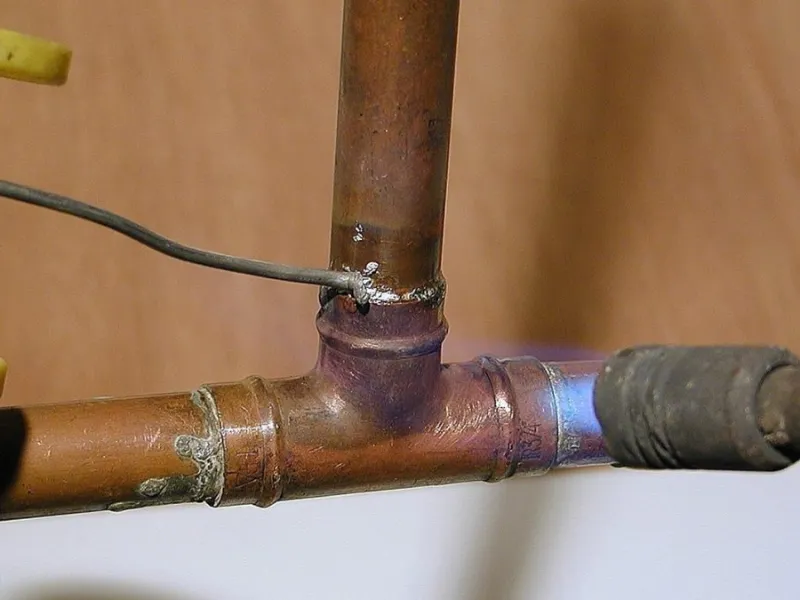
Pipe Leak Repair
Precise repairs for the pipe we just located, with minimal access and lasting results.
Learn MoreCopper, PEX, galvanized steel, PVC or CPVC — each fails differently, and each requires the right detection approach. We locate the leak inside your pipes whether they run through a wall, under a floor or beneath the yard.
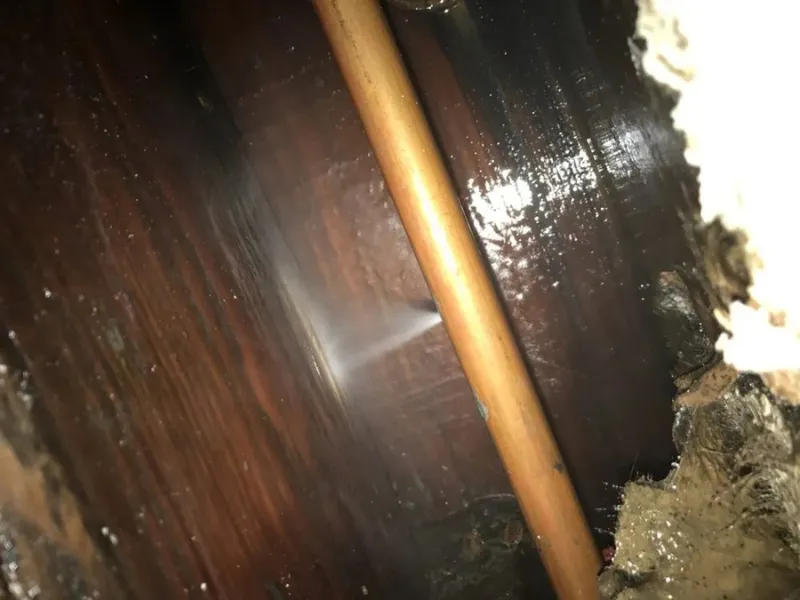


Pipes are hidden by design. Without accurate detection, repairs become destructive, expensive and sometimes unsuccessful.
Finding the leak first means opening one small area instead of several exploratory holes.
A well-located leak can be repaired once, rather than chased from one wrong spot to the next.
Faster location and repair means less water soaking into the structure of your home.
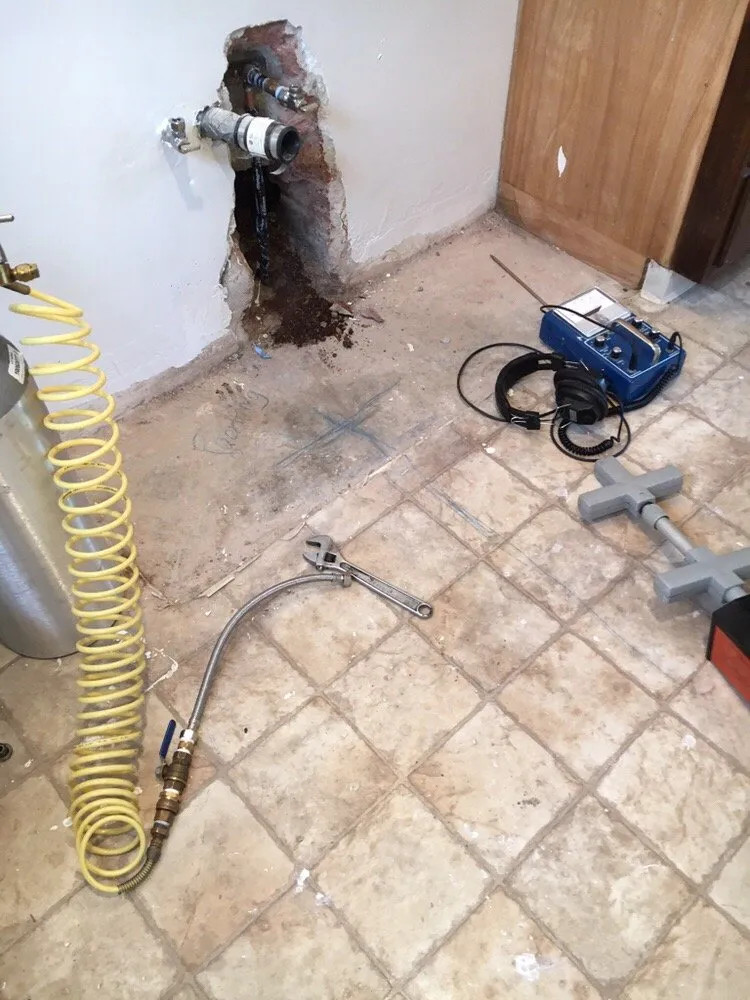
Every pipe leak leaves a signature. Pressurized water escaping a small opening creates a sound, a pressure drop and often a temperature change. Drain leaks leave moisture patterns. Our job is to read those signals and translate them into a precise location.
We begin with a pressure or flow test to confirm the leak and identify which line is involved. We then trace the pipe with electronic equipment so we know its exact path, and use acoustic listening to narrow the leak along that path. Thermal imaging or tracer gas confirms hard-to-find leaks, particularly in drains or lines deep beneath a slab. Multiple methods always agree before we mark a location.
Different materials fail in different ways. Our approach adapts to what your home is actually built with.
Pinholes from corrosion and abrasion are the most common copper failures, often hidden in wall cavities or under slabs.
PEX is durable but can leak at crimp rings, manifolds and fittings if connections were made incorrectly or stressed.
Old galvanized lines corrode internally, reducing flow and eventually developing leaks at threaded joints.
These drain and supply plastics can crack at joints and fittings, especially after settling or ground movement.
Drain leaks seep slowly and often surface as dampness or odor rather than a visible stream.
Buried lines leak where soil shifts, fittings fail or roots press against the pipe.
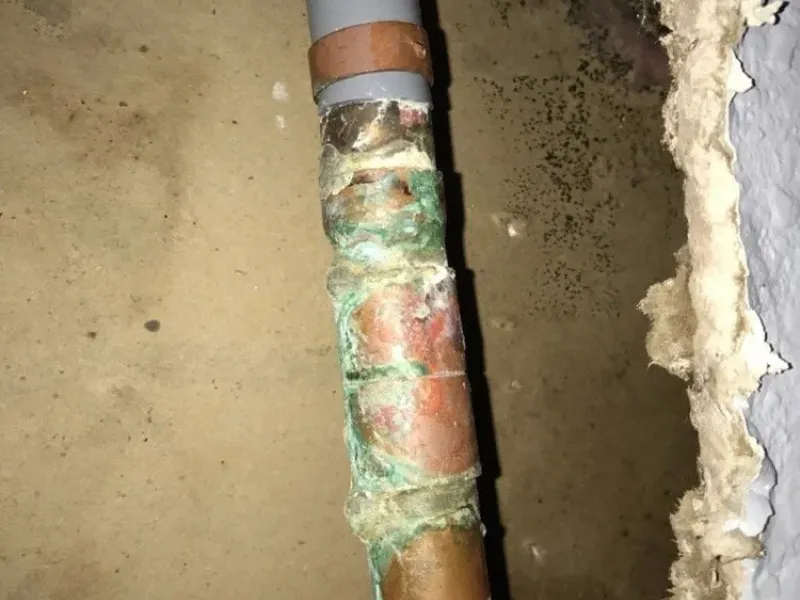
A supply line carries clean water under constant pressure. When it fails, the leak is active around the clock, and the sound of escaping water is often audible. Drain lines carry waste by gravity and only flow when something is in use, so a drain leak can seep quietly for a long time and show up as dampness, staining or odor rather than a sound.
That difference changes how we test. For supplies, we isolate zones and watch pressure. A section that will not hold pressure is the one that is leaking, and acoustic listening then pinpoints where along that section the break sits. For drains, we use flow tests, moisture mapping and, when needed, tracer gas to follow the leak path. Applying the wrong test to the wrong system is one of the main reasons leaks go unfound, so we identify the system first and choose tools to match. Without that first step, hours can be spent testing a line that was never the problem, and the actual leak continues to run the entire time.
Pipe leaks rarely announce themselves. These clues tell us a line is losing water.
Water you are billed for but never use is the strongest sign of a hidden pipe leak.
Water heard inside a wall when fixtures are off indicates a pressurized line leak.
A sudden or intermittent drop in pressure points to a break in that supply line.
Discolored walls or bubbling paint reveal water escaping behind a finished surface.
Cupped wood or lifting tile can indicate a pipe leak beneath the floor assembly.
A damp smell that will not clear often means water is collecting in a hidden space.
An oddly green or soft patch in the yard can mark a leaking buried line.
With everything shut off, a spinning meter confirms an active leak somewhere in the piping.
A methodical inspection that turns a hidden problem into a known location.
Pressure and flow tests tell us whether the leak is in supplies, drains or a specific zone.
Electronic equipment maps the hidden path so we know exactly where the line runs.
Acoustic, thermal or tracer gas methods narrow the leak to a precise point.
We mark the spot, document it and recommend the best repair path.
No single tool finds every leak. We select the right combination for the pipe, material and location in front of us.
Microphones pick up the sound of water escaping under pressure through the pipe wall.
Transmitters follow the pipe underground and behind walls to reveal its exact route.
Infrared cameras spot temperature changes created by hot-water leaks or moisture.
Confirms stubborn drain and underground leaks that sound and heat cannot resolve alone.
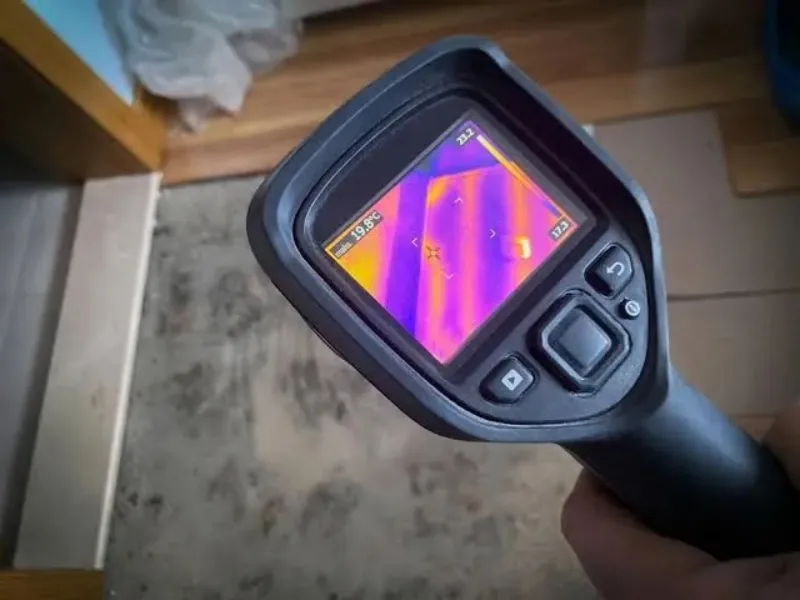
Many detection attempts fail because the technician assumes where a pipe runs. We do not assume. We trace the actual line first, then focus our listening on that known path. This two-step approach dramatically improves accuracy, especially in older homes where plumbing has been modified over the years.
We also confirm every result across multiple instruments. If the acoustic signal and the thermal image point to the same place, you can trust the mark on the floor. If they do not agree, we keep working until the evidence is consistent.
Once we find the leak, these services take it from there.
Precise repairs for the pipe we just located, with minimal access and lasting results.
Learn More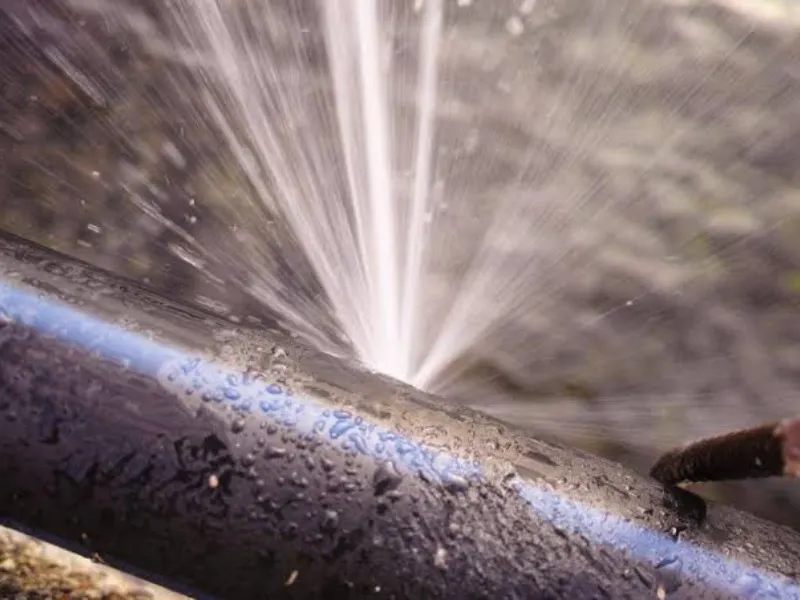
Broad water leak detection when you are not yet sure which system is leaking.
Learn More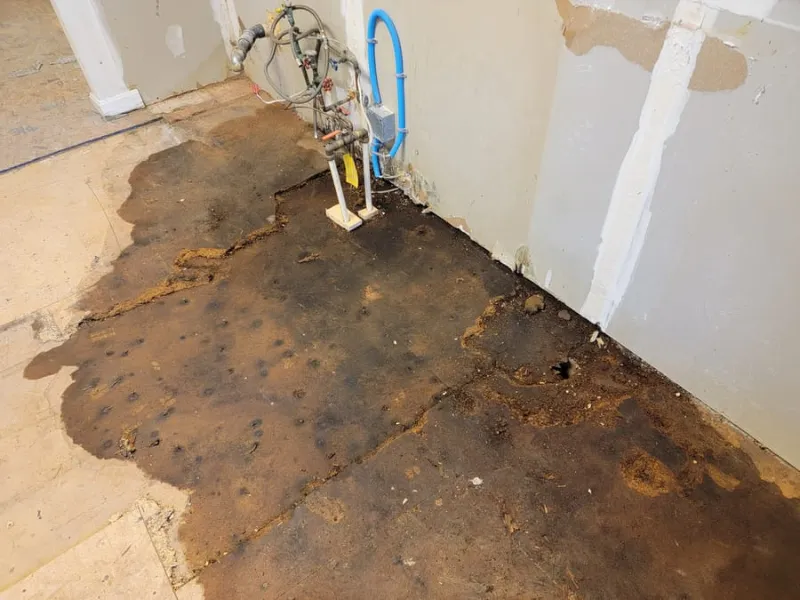
Specialized detection when the leaking pipe runs beneath a concrete foundation.
Learn MoreYes. PEX leaks usually occur at crimp rings, manifolds and fittings rather than the pipe itself. We pressure test the system to isolate the branch, then locate the failed connection with acoustic and electronic methods.
We combine pressure isolation with acoustic listening and thermal imaging to trace the sound and temperature change to a specific spot. For hard-to-find cases, tracer gas can confirm the exact location.
Yes. Supply and drain leaks behave very differently, so we use different tests for each. Drain leaks are confirmed with flow testing and moisture or tracer gas methods.
In most cases we narrow the leak to within a few inches. Accuracy improves when we can trace the pipe first, which is why we map the run before listening for the leak. Multiple instruments must agree before we mark a spot for repair.
Some tests require briefly shutting off fixtures or isolating a zone. The inspection is still non-invasive, and we keep any disruption to a minimum.
Where appropriate, drain cameras help us inspect internal pipe conditions and confirm the cause of a blockage or break. For pressurized supply lines, acoustic and electronic methods are the primary tools because the leak is detected from outside the pipe.
We mark and document the location and recommend the most sensible repair, explaining any alternatives along with their lifespan. Our team can then complete a precise pipe leak repair with minimal access.
Get an accurate, non-invasive diagnosis and a clear repair plan. Free estimates available.