
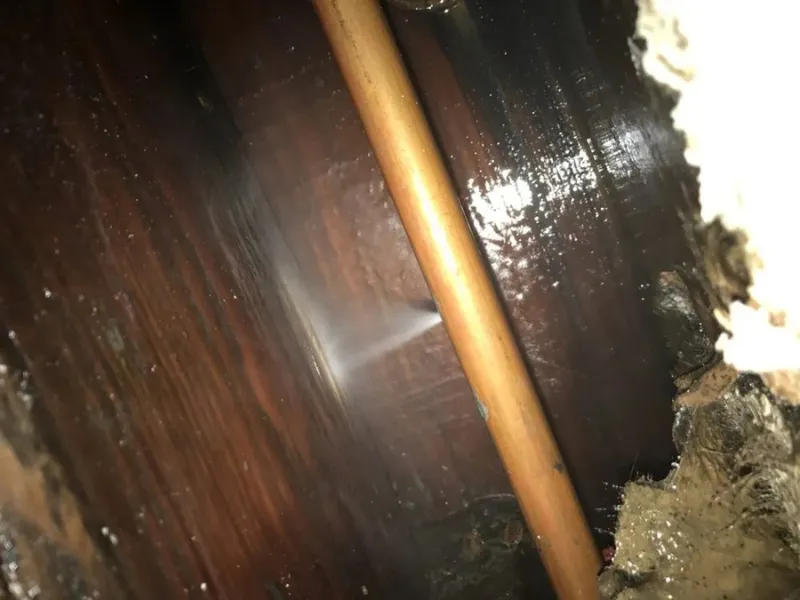
Pipe Leak Detection
Locate leaks in any pipe system, including irrigation and service lines.
Learn MoreA pool that loses more than an inch or two of water a week has a leak, and adding water is not a fix. We test the shell, plumbing and equipment to find the source, so the repair is targeted instead of expensive guesswork.


Chasing a pool leak with a hose masks the real problem while it gets worse. Early detection protects your equipment, your deck and your water bill.
Constant refilling wastes water and unbalances your chemistry, costing you money every week.
Air pulled into a leaking suction line makes the pump work harder and can cause failure.
Water escaping underground can undermine decking, cause settlement and soften surrounding soil.
Pool leaks fall into two broad categories: leaks in the structure or fittings, and leaks in the plumbing. We separate those possibilities through a structured test sequence rather than guessing.
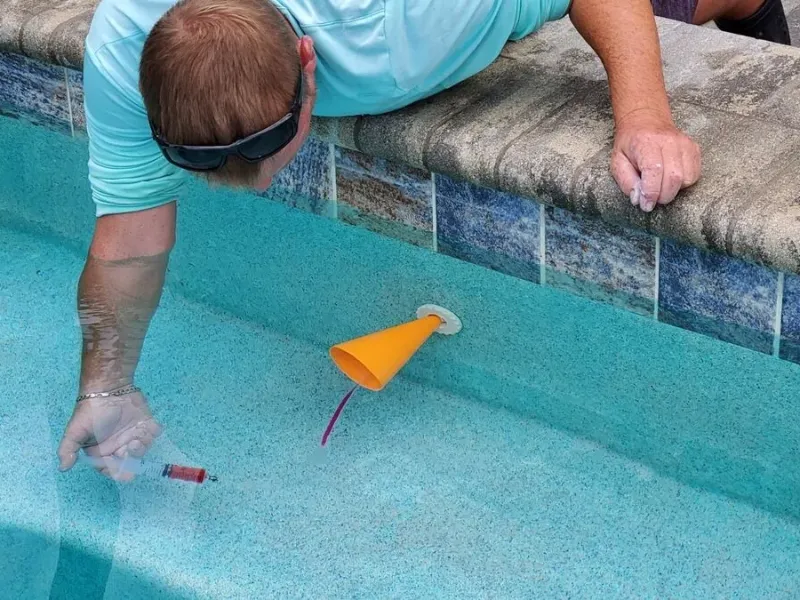
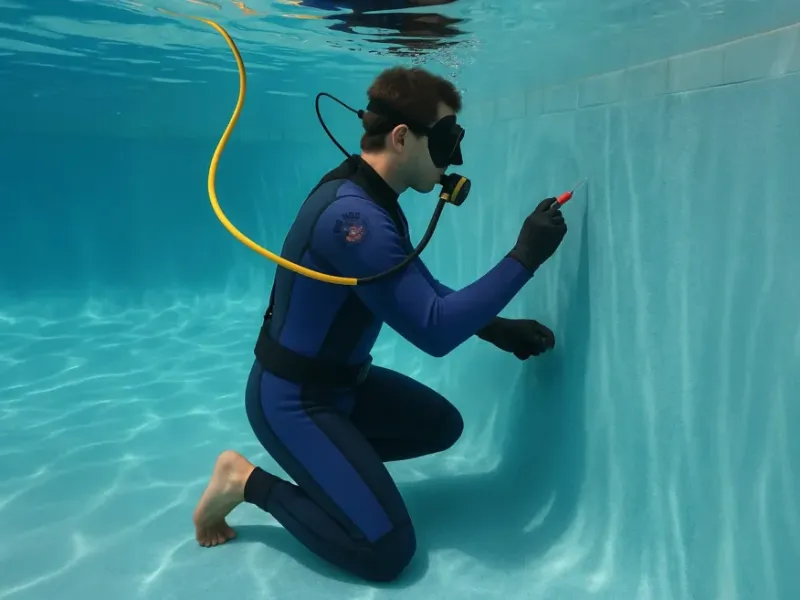
We start with a bucket test to confirm the pool is losing more water than simple evaporation explains. Then we inspect the shell, skimmer, light niches, return fittings and main drain for cracks and gaps, often using a dye test that shows water being pulled into a leak. For the plumbing, we pressure test individual lines. If a line will not hold pressure, we locate the break with acoustic and electronic tools so only the affected run is excavated, not the whole yard.
We know the high-probability spots, and we check every one during an inspection.
Cracks around the skimmer are among the most common pool leaks, especially in older concrete and vinyl pools.
The seal around a pool light is a frequent leak point and often hidden below the waterline.
Cracked or loose return fittings let water escape into the surrounding soil or shell.
Buried suction and return lines crack from ground movement or age, leaking under the deck.
Structural cracks in plaster, gunite or vinyl liners allow water to seep out of the pool.
Pump seals, heater connections, valves and backwash lines can leak around the equipment pad.
Leak testing is not one-size-fits-all. The methods adjust to the type of water feature on your property.
We test the shell, fittings, skimmer and buried plumbing. Concrete, plaster and vinyl pools each have characteristic leak points that we check in order.
Above-ground pools leak at seams, through the liner and at inlet or outlet fittings. We inspect these areas and pressure test any plumbed lines serving the pool.
Spas leak at jet fittings, heater unions, pumps and the shell. We test the equipment and shell together to separate a plumbing issue from a structural one.
Fountains, waterfalls and spillways use pumps and hidden lines that can leak. We trace their plumbing and test joints the same way we test a pool circuit.
Pumps, filters, heaters and valves are inspected for weeping seals and loose unions, which are a frequent source of unexplained water loss.
Autofill valves and overflow drains can stick or leak, quietly wasting water at a rate that is easy to mistake for evaporation.
Some signs are easy to spot; others only show up over days. Any of these warrant a professional test.
Losing more than an inch or two a week is the classic sign of a pool leak.
Handrails and ladders can loosen when water erodes the deck around their anchors.
A pump that loses prime or pulls air often has a leak on the suction side.
Needing more chemicals than usual can mean fresh water is constantly replacing lost water.
Soft, sinking or unusually wet deck areas point to water escaping beneath them.
Cracks in the shell, tile line or skimmer are direct evidence of a possible leak.
Soggy or sinking spots near the pool can mark a leaking underground line.
Bubbles coming from return jets usually indicate air entering through a suction-side leak.
Systematic testing that separates structural leaks from plumbing leaks.
A bucket test and history check tell us whether the pool is truly losing water abnormally.
We inspect and dye test the shell, skimmer, lights and fittings at every penetration.
We isolate and pressurize each line to find which run will not hold pressure.
We narrow the leak to a specific area and explain the repair options clearly.
We use several complementary methods so the leak is confirmed, not just suspected.
Dye introduced near cracks and fittings is drawn toward an active leak, revealing it visually.
Each plumbing line is plugged and pressurized to prove whether it holds or leaks.
Ground microphones pick up the sound of water escaping a buried line under the deck.
Transmitters trace buried pool plumbing so we excavate only the affected section.
Pool leaks can be deceptive. Water entering a buried line can surface far from the actual break, and a leak in one area can masquerade as a problem in another. We test the shell and the plumbing separately so we can tell you exactly what is leaking and where.
That precision saves you money. Instead of excavating a large area of deck or replacing equipment that is not the problem, you get a specific finding and a targeted repair. We explain what we tested, what the results were, and what we recommend next.
Pool lines are not the only ones that leak. These services cover the rest of the system.
Locate leaks in any pipe system, including irrigation and service lines.
Learn More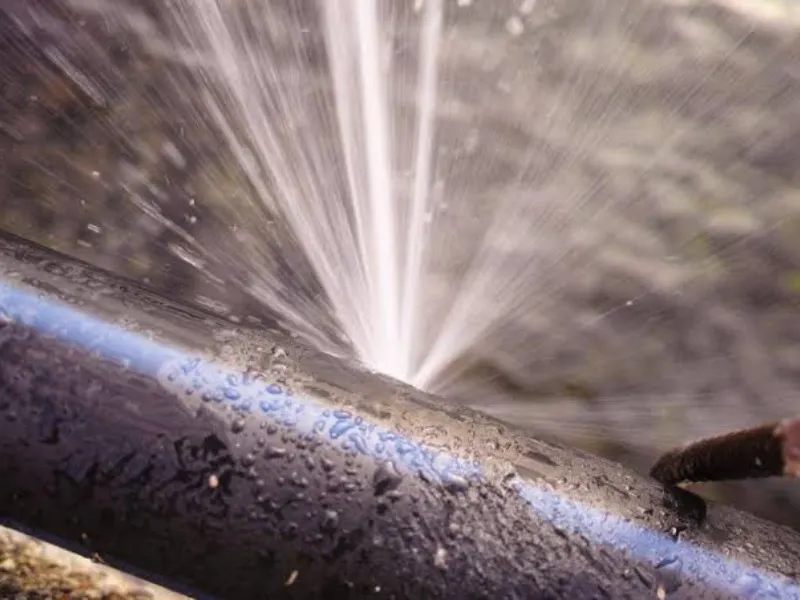
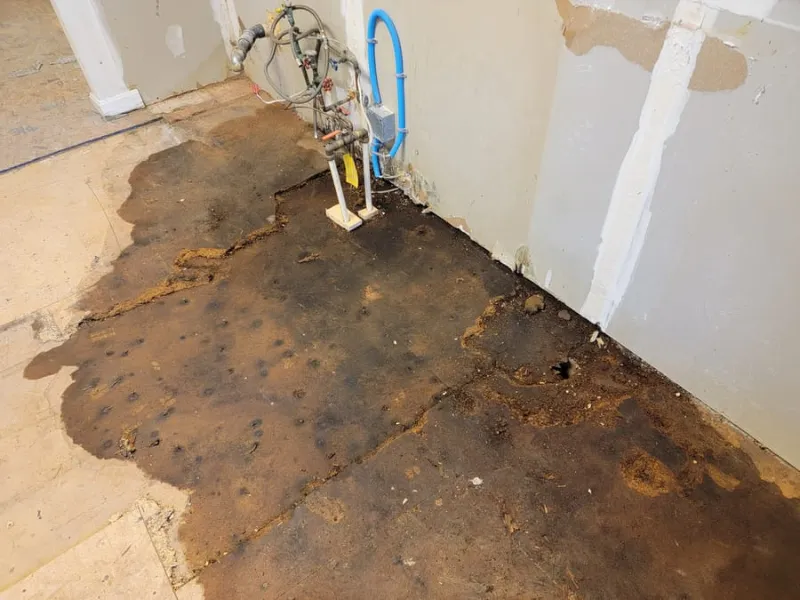
For leaks beneath a foundation, often discovered thanks to an unrelated high bill.
Learn MoreA pool can lose roughly a quarter inch per day to evaporation, more in hot, dry or windy weather. If you are losing an inch or more per day, or two inches or more per week, a leak is likely.
The bucket test compares water loss in the pool with water loss in a bucket of pool water sitting beside it. Because the bucket loses only to evaporation, a bigger drop in the pool indicates a leak.
Yes. We pressure test each line to find which one is losing water, then use acoustic and electronic locating to pinpoint the break so only a small area needs to be excavated.
Yes. We test spas and hot tubs for shell leaks, fitting leaks and plumbing leaks using the same methods we use on pools.
A typical inspection takes one to two hours. Pools with multiple lines or suspected multiple leaks can take longer, and we share findings as we go so there are no surprises when the report is complete.
It can. Escaping water can undermine decking, cause soil settlement and, in severe cases, affect nearby structures. Finding and fixing the leak early prevents that progression.
Keep the water level normal to protect the pump, avoid aggressive chemical additions, and note how much water you add and when. Those details help us confirm the leak rate.
Get a professional, non-invasive leak test and a targeted repair plan. Free estimates available.